If your Sub-Zero 500 series refrigerator — or a 600 or 700 series built-in — has stopped cooling, thrown an alarm, or started icing up, you don't need a new refrigerator. You need a technician who still knows these platforms. We repair legacy Sub-Zero 500, 600, and 700 series units every week across the San Francisco Bay Area: same- or next-day visits, OEM parts, and a written flat-rate quote before any work begins.
Sub-Zero discontinued these series years ago, but never abandoned them — and neither have we. Three generations, one specialty: keeping Bay Area built-ins running.
| Series | Produced | Models we repair | Platform notes |
|---|---|---|---|
| 500 Series | 1987 – 1999 | 501R, 511, 532, 542, 550, 561, 590 | The platform that defined the built-in category. Mechanical cold controls, single- and dual-compressor layouts, over-and-under and side-by-side configurations. |
| 600 Series | 1996 – 2009 | 601R / 601F, 611, 632, 642, 650, 661, 685, 690, 695 | The first electronically controlled generation. Control boards, digital displays, and the over-and-under layouts still common in Bay Area kitchens remodeled in the 2000s. |
| 700 Series | 1992 – 2015 | 700TC, 700TF, 700TR, 700BR, 700BC, 700BF | Fully integrated tall and base units that disappear into cabinetry. Two independent cooling circuits — the fridge and freezer sides fail, and are repaired, separately. |
| Pre-1987 | Before 1987 | Model 36, Model 48 and other early built-ins | Serviceable in most cases — call with the serial number and we'll confirm parts before booking. |
The data plate is inside the fresh food compartment — on most 500 and 600 series units along the upper interior wall; on some units it's on the frame behind the top grille panel, next to the condenser. The model number starts with the series (550, 632, 700TC…). Can't find it? Send us a photo of the unit and we'll identify the platform.
Each generation ages in its own way. Knowing the difference is what separates a one-visit repair from weeks of guesswork — and it's why generalist companies walk away from these units.
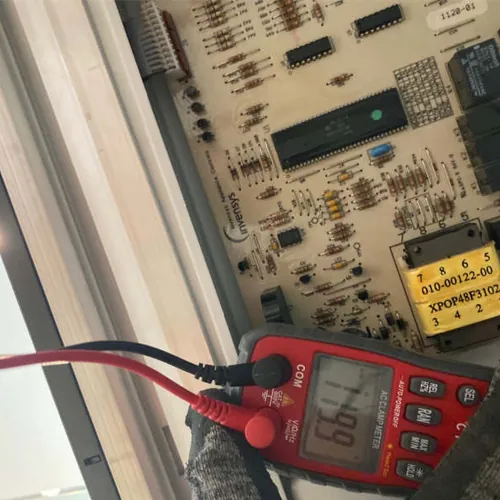
What fails after 25+ years is almost always electromechanical, not structural. We see worn compressor start relays and overloads, cold controls that drift out of calibration (the fridge runs too warm or freezes produce), failed defrost heaters and terminators behind frost build-up, and door gaskets that have hardened past sealing. Every one of these is a component repair — the cabinet, insulation, and compressors themselves are usually still sound.
The 600 series moved Sub-Zero to electronic control, and today the control board is the most common failure we diagnose — units that blink, alarm, or shut a circuit down with the mechanicals in perfect health. We also see evaporator fan motors, iced-up defrost drains, and failing thermistors that feed the board bad temperature data. Boards for these units can still be sourced or professionally rebuilt; a board fault is not a death sentence for the refrigerator.
The 700 series' defining feature works in your favor: the refrigerator and freezer run on independent sealed circuits. When one side fails, the other keeps working — and the repair is confined to the failed circuit. Typical calls: a single compressor or start component down, thermistor drift causing temperature swings, and condensation or seal issues on the integrated vacuum-style doors. Replacing one compressor on a 700 costs a fraction of replacing the unit.
Before you call: if the unit is running warm, check the condenser coils — on 500, 600, and 700 series built-ins they sit at the top of the unit, behind the louvered grille panel. A decade of dust up there is the single most common "failure" we're called out for — and a 15-minute cleaning you can do yourself. If the coils are clean and it's still warm, that's when you need us.
Yes — for nearly everything that actually fails. Here is the real picture, tier by tier, so you know what to expect before we arrive.
Compressor start relays and overloads, defrost heaters and terminators, thermistors, evaporator and condenser fan motors, door gaskets, water valves. These fail the most — so they ride with us, and most legacy repairs close in a single visit.
Control boards, cold controls, ice maker assemblies, hinges and closers, compressors. Sub-Zero and its authorized distributors still stock the 500, 600, and 700 series catalogs — including inventory retained specifically for discontinued models. We order same day and return when the part lands.
A handful of items — certain trim pieces, a few early-500 controls — are genuinely gone. Nearly all have a proven path anyway: compatible current-catalog substitutes or professional control-board rebuilds. If a repair truly can't be sourced, we tell you at the diagnostic, not after weeks of waiting.
Companies that sell new units will tell you an old Sub-Zero isn't worth fixing. Here's what they leave out: a legacy Sub-Zero is a component-repairable machine built into cabinetry that was measured for it. A new built-in runs well into five figures — and current models often don't match the old cutout dimensions, which means the real replacement bill includes cabinet modification, panel work, and sometimes flooring.
Against that, a component repair on a working platform — a relay, a board, a fan, even a single compressor on a 700 — restores the unit for a small fraction of replacement cost and typically buys years of additional service.
If that's your situation, we say so at the diagnostic — and you've spent one service call to know for certain. Deciding between the factory network and an independent? Read our certified vs independent comparison.
Every legacy job is priced the same transparent way. You pay a flat service call fee for the visit and full diagnostic — quoted when you book. You then get a written, flat-rate quote for the repair itself before we touch anything, with the diagnostic fee applied toward the job. No hourly meter, no surprise line items.
What moves the number: the class of part (a gasket or relay sits at one end, a compressor or sealed-system repair at the other), the series, and access — integrated 700s take more disassembly than a 500 with a service-friendly layout. You approve the exact figure, in writing, before work begins.
"They actually knew our 700-series. Three other companies said they couldn't source the part. Best Pro had it within a day. Honest quote, clean work, zero upselling. Exactly what you want on a $12,000 refrigerator."
Give us the model and serial from the data plate — we arrive knowing your platform and carrying its common parts.
Compressor circuits, condenser, defrost system, controls or boards — checked against how that generation actually fails.
The full repair price in writing before we start — and an honest verdict if replacement is the smarter spend.
OEM Sub-Zero parts, temperature verification before we leave, and a 6-month warranty on parts and labor.
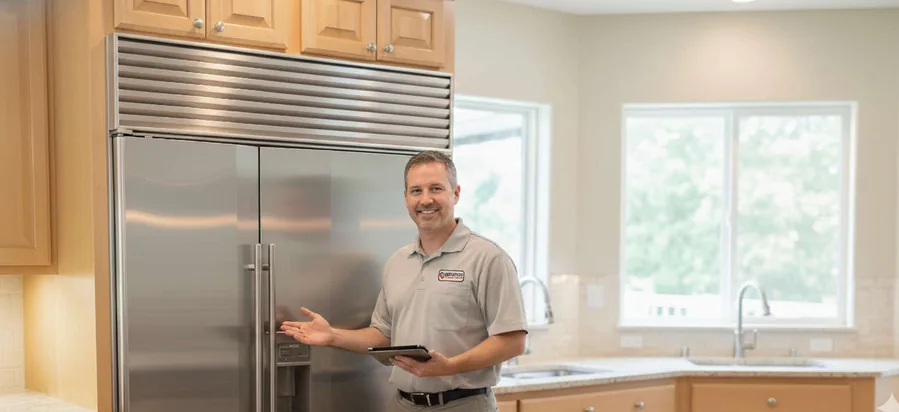
10+ years servicing Sub-Zero refrigeration, with the 500, 600, and 700 series platforms as a specialty. Trained on Sub-Zero dual-compressor and sealed-system architecture; hundreds of legacy units diagnosed and repaired across the Bay Area. This page reflects what he sees in the field — not a sales script.
Last updated: July 2026
The homes that received 500, 600, and 700 series units in the '80s, '90s, and 2000s are exactly where we work every day: San Francisco's older neighborhoods, the Peninsula from Burlingame and Hillsborough down to Atherton and Palo Alto, the South Bay hills of Saratoga and Los Gatos, the East Bay from Berkeley to Danville, and Marin, Sonoma, and Napa in the North Bay. Same-day appointments are typically available when you call before noon. See the full list of cities we cover.
Tell us the series and the symptom. We'll confirm parts, quote the visit, and get a legacy specialist to your door — often the same day.
Hours: 8:00 AM – 6:00 PM · All nine Bay Area counties
Tell us who you are and where the unit is — the next step is picking your arrival window.